Total Mental Health — Beta
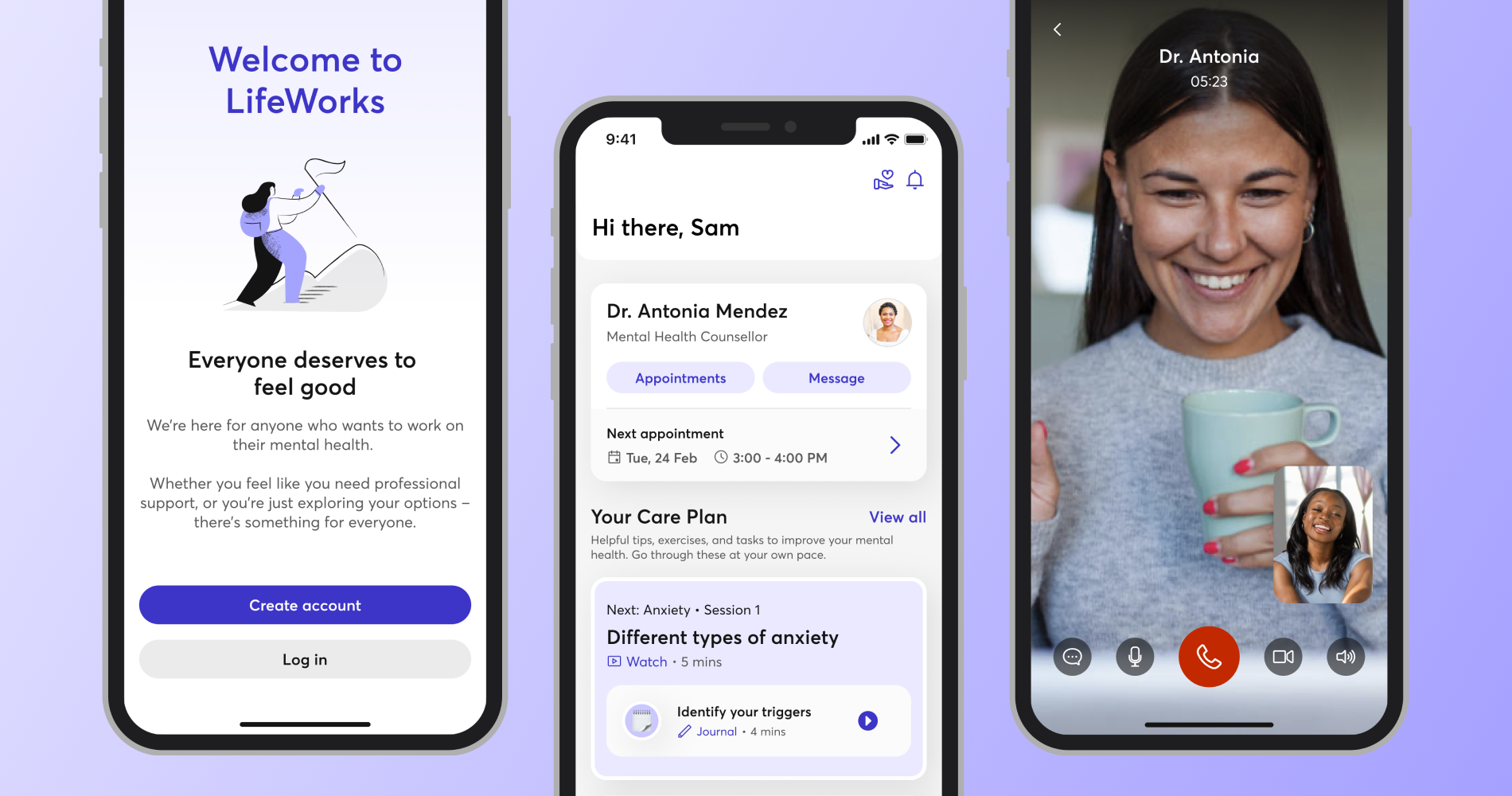
Design a new mental health service from scratch, under tight deadlines and with a large, diverse group of stakeholders
A large vision prototype to align stakeholders, followed by a significantly simplified MVP for a Canadian beta launch
A constrained beta release that surfaced critical usability and safety gaps — and drove meaningful internal process improvements
Background
Toward the end of 2021, LifeWorks engaged the Boston Consulting Group (BCG) to conduct a large market research study into potential gaps in the mental health app market. The Covid-19 pandemic had demonstrated just how under-resourced and difficult it can be to get mental health support — a global issue with no straightforward solution.
Most often, receiving counselling is not a straightforward process and comes with many difficulties, not least financial. BCG saw an opportunity to leverage LifeWorks' existing EAP infrastructure and provide employees with easier access to counselling through their employers.
Process
In early 2022, LifeWorks took over BCG's initial designs and began working on a vision for the new service — later named Total Mental Health (TMH). The design team consisted of myself as the senior designer, a lead designer, and the design manager. Given the project's complexity, it required us to closely collaborate with a wide range of roles and responsibilities.
During the initial phase, we worked with the VP and Director of Product Experience, clinicians, content strategists, and multiple product managers. Over several weeks, we explored various design directions, drawing from BCG's initial research and our own insights. This collaborative effort laid the foundation for the development of TMH.
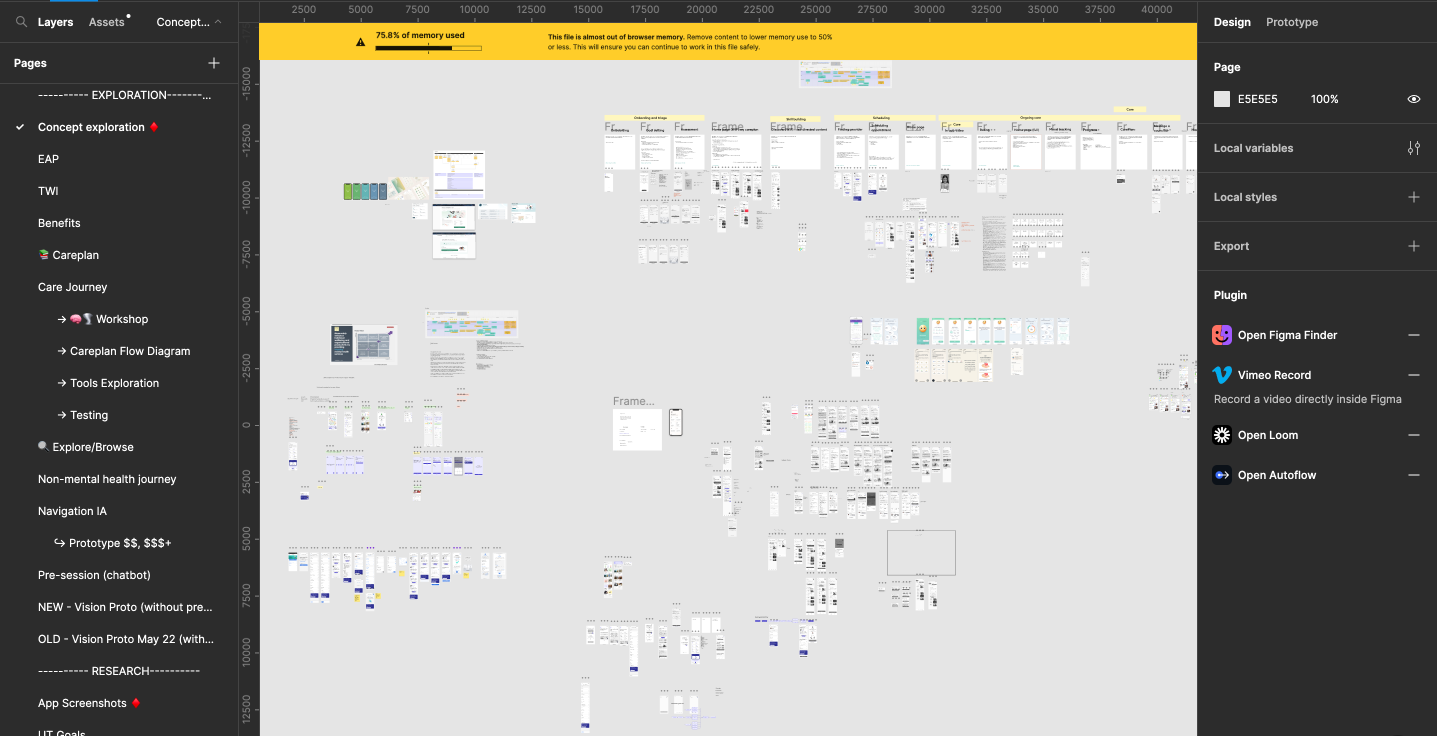
Our exploration file reached Figma's memory limit at the time.
Vision Prototype
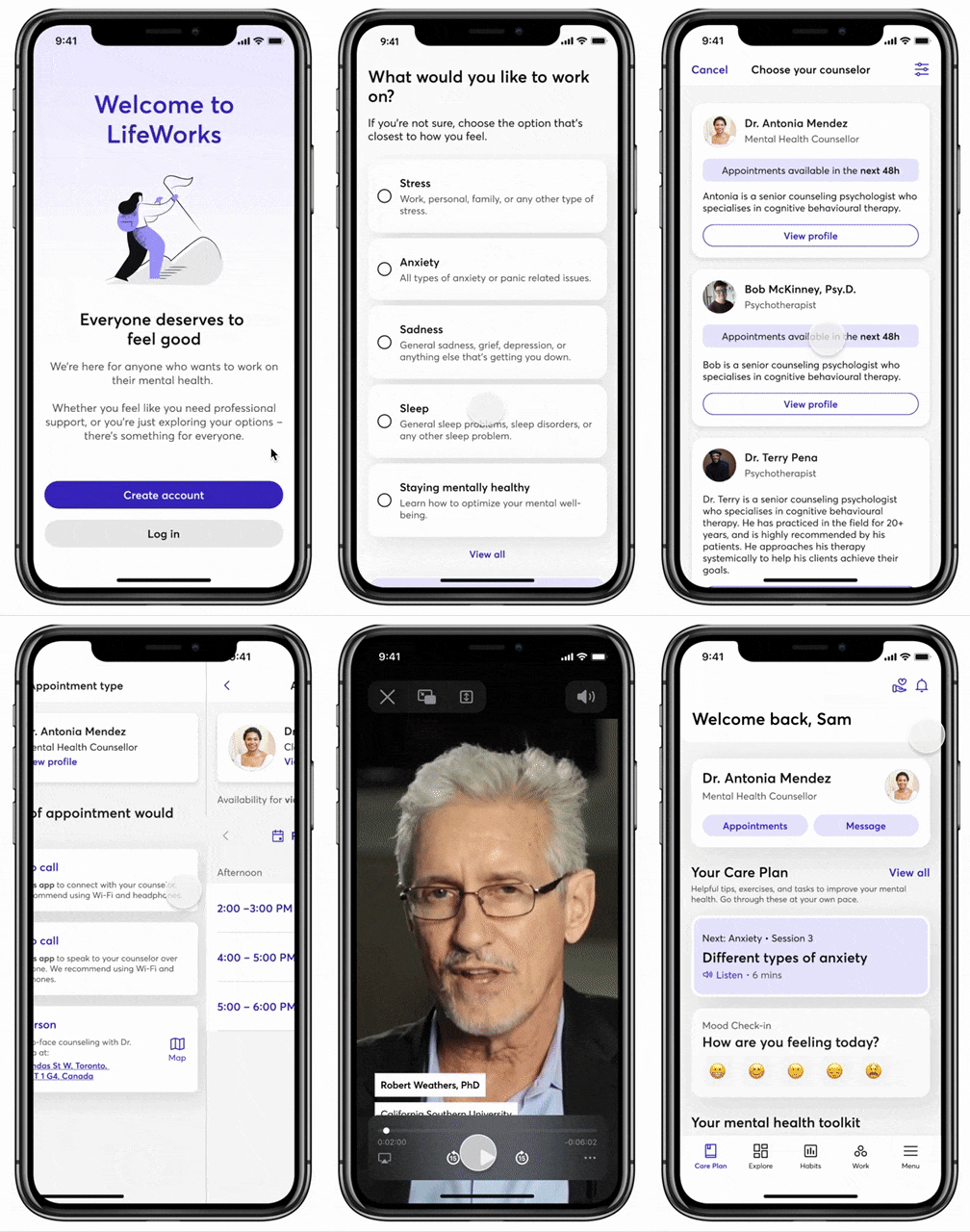
Our extensive exploration resulted in the creation of a large vision prototype, shared with diverse stakeholders and potential clients ahead of the beta trial. It provided a glimpse into what the future of TMH could look like and an overview of the features it would include.
After a short onboarding, a user's first step is to pick an area to focus on, followed by two clinical assessments (PHQ-9 and GAD-7). If the assessments suggest a significant impact on wellbeing, the app recommends considering a consultation with a counsellor. Users can then explore available counsellors and book appointments for video, phone, or in-person sessions.
For those who prefer self-guided support, care plans offer interactive modules including short articles, video content, journals, mood trackers, and meditation or breathing exercises.
Beta Release
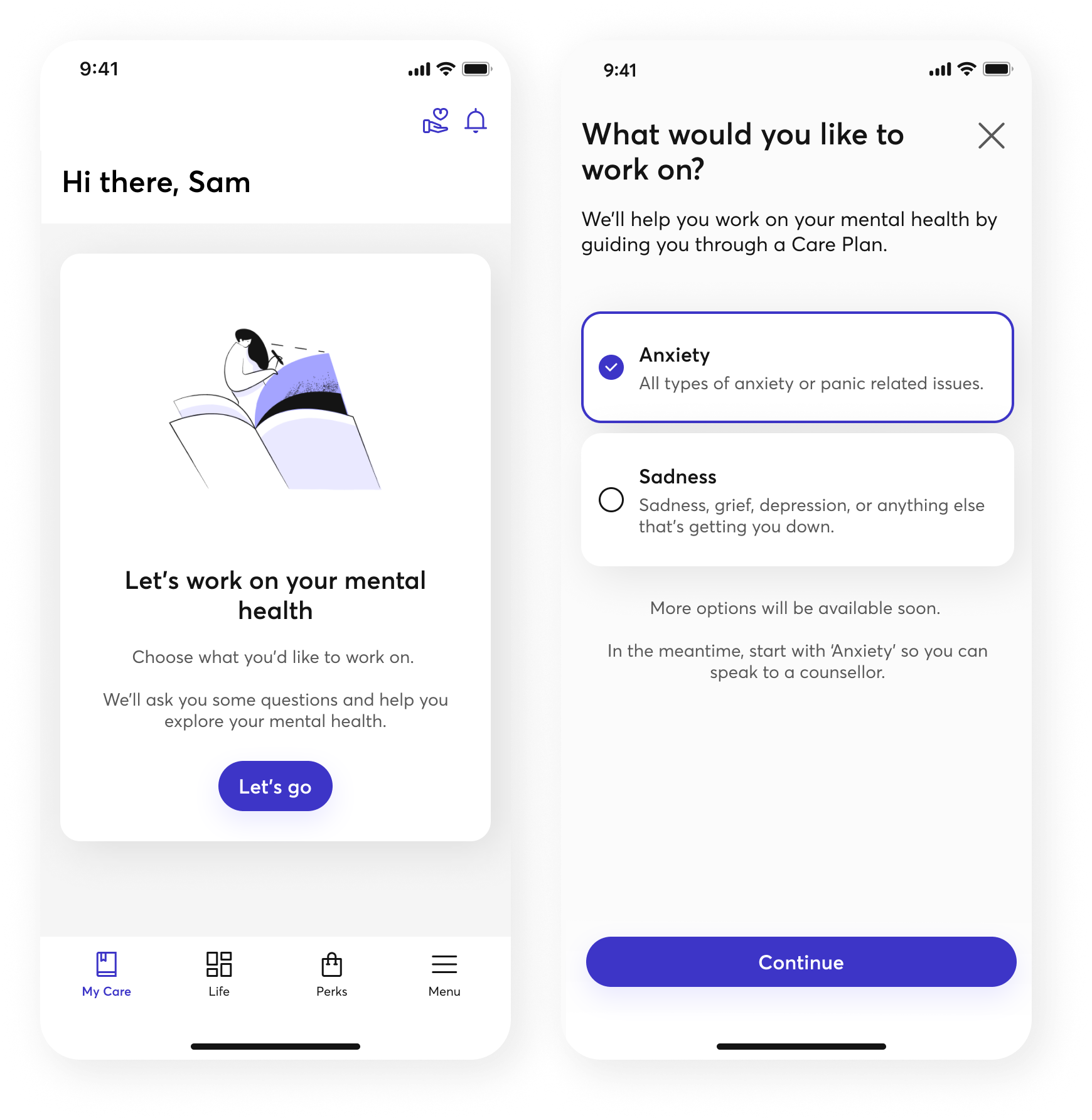
The business set a strict deadline for the beta release, to be tested with three clients in Canada. To meet the deadline, the original concept had to be significantly simplified. The MVP included only basic functionality: supporting two clinical assessments (addressing anxiety and depression), and allowing users to book their initial counselling session.
Topic selection constraint
Beta users were informed that initially only these two topics would be supported — though they had the flexibility to explore other topics if they chose to work with a counsellor.
Unfortunately, due to technical constraints, users were required to select one of the given topics before they would see the option to book a counselling appointment.
→ This resulted in significant negative feedback from testers.
Content limitations
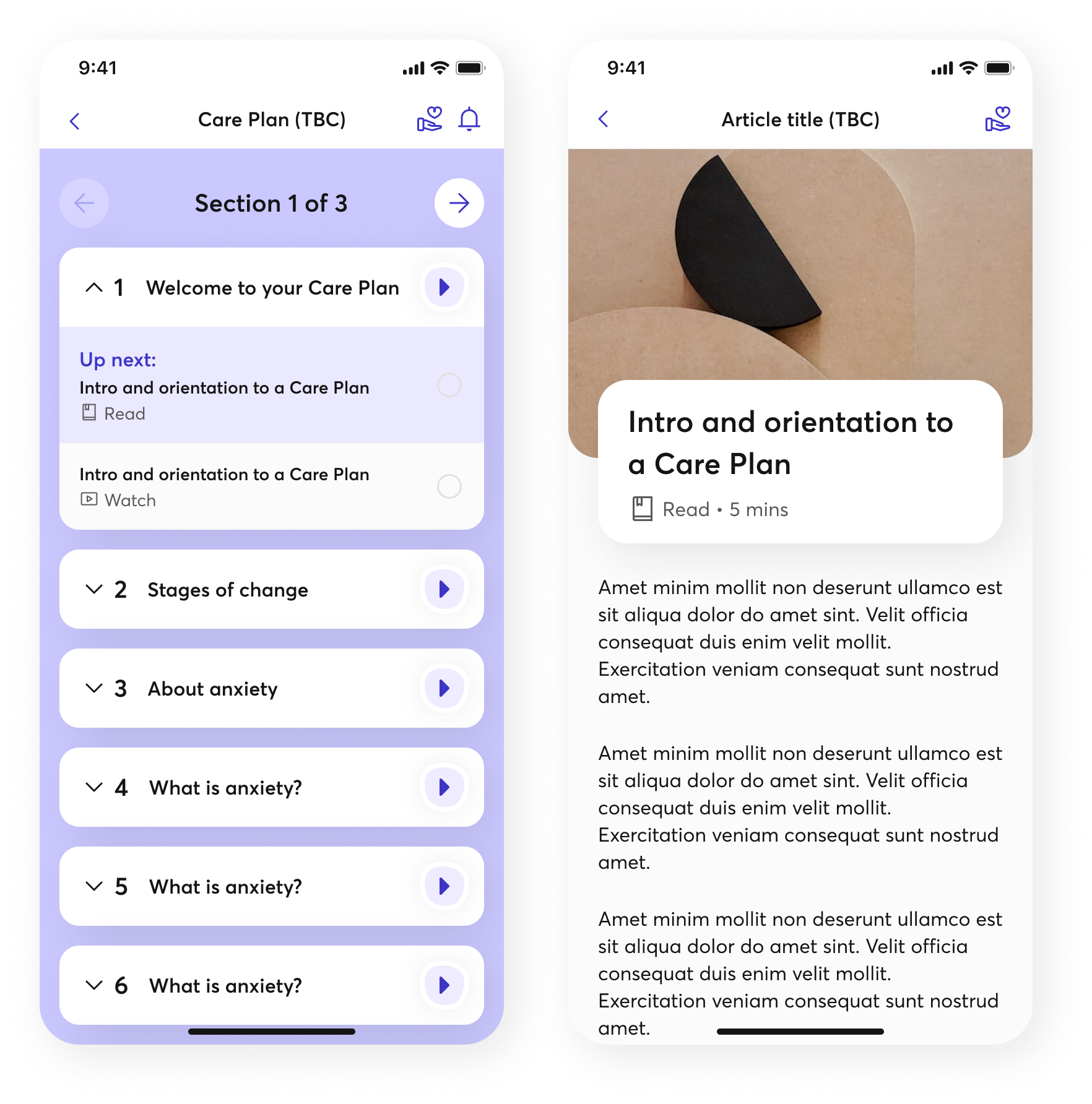
Much of the content was repurposed from the existing EAP platform. While there was a substantial effort to create fresh, interactive content, the tight deadline limited how far this could be developed.
→ Users flagged lack of interactivity as a concern
Counselling limitations
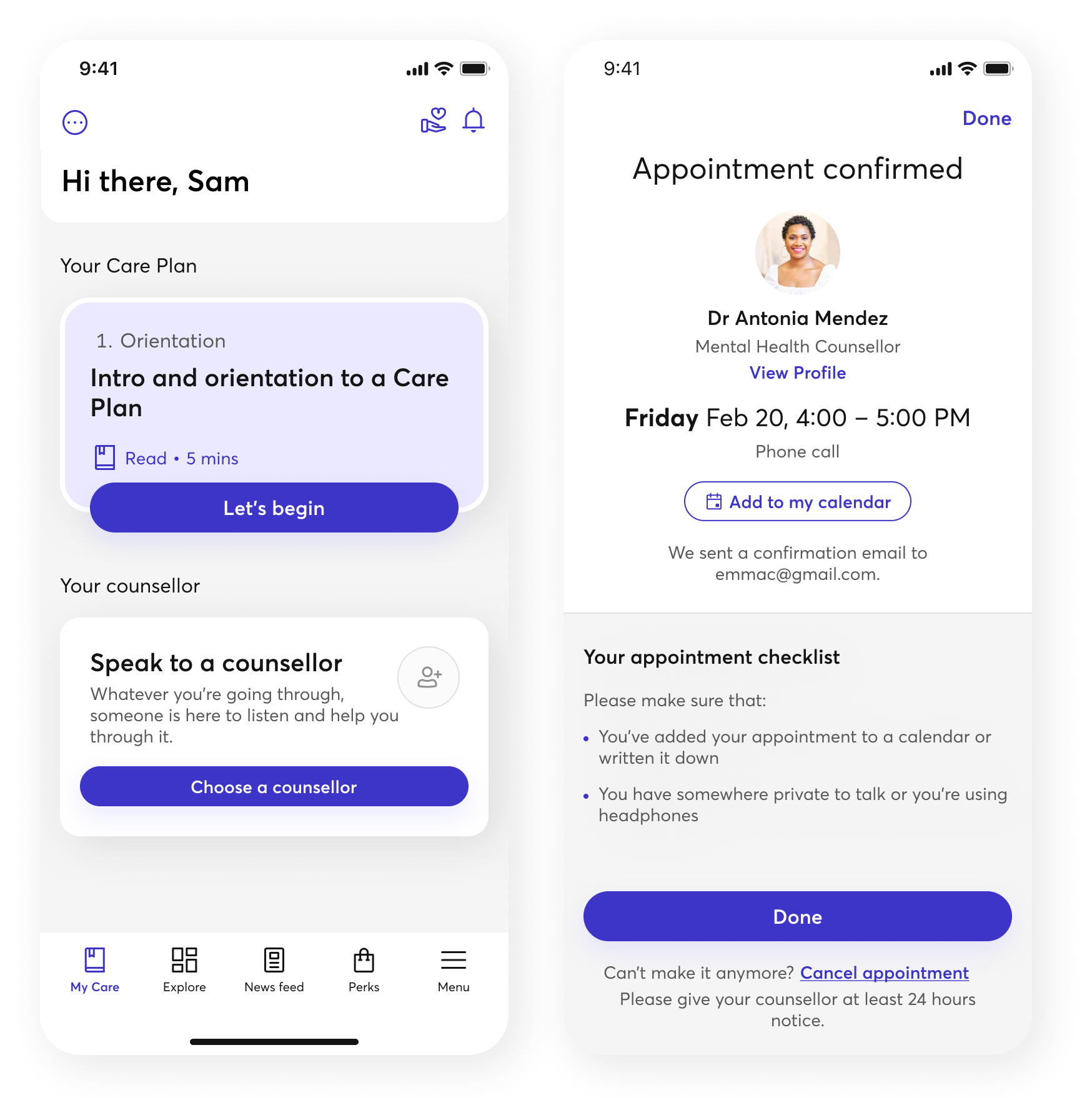
Beta users were able to book a counsellor through the app — but it didn't support in-app calling. Video and phone calls had to be made via Microsoft Teams. Users were also unable to schedule follow-up appointments themselves.
→ Users expressed dissatisfaction that the counselling option was not more prominent in the app.
Conclusion
While working on an app from scratch was exciting, this project came with numerous challenges. Decision-making involved one too many stakeholders and was primarily driven by the urgency to deliver to clients — resulting in tight and arbitrary deadlines that affected both the design and development teams.
Ultimately, the outcome was a less-than-optimal app, lacking essential safety features crucial for mental health-related applications. This experience served as an important learning curve for the entire company, highlighting areas where internal processes needed to be improved.